
SoulCycle, CycleBar, Barry’s Bootcamp, FlyWheel, Orangetheory, Barre, CrossFit. The list goes on.
5 years ago, had you mentioned any of these, very few would have known what you were talking about. Nowadays, it would be hard to have a conversation about fitness or working out, without at least one these brands being mentioned.
When people talk about the rise of the ‘Sharing Economy’, the likes of Uber for ride-sharing and Airbnb for home-sharing come to mind. What many people do not talk about is how the sharing economy as a business model is creating unique emotionally powerful brands that are disrupting the fitness industry as we know it. I now understand why.
8 months ago I started CrossFit. I had always been an active gym-goer, but after 8 years of going to a conventional gym and pretending I knew what I was doing, I had lost motivation. I found myself dragging myself to the gym, finding a few machines and weights that were not being used, throwing them around and spending more time on my phone than actually exercising. I was bored, unmotivated and needed something new.
I had heard of CrossFit but didn’t know much about it until my friend dragged me along to a free trial class. Instantly I was hooked. I got more done in that hour class than I had in any gym session in the past 5 years. The crazier part was for once, I actually enjoyed it, felt great and wanted more.
So what do these brands have to do with the sharing economy?
Well, what makes brands like SoulCycle, CrossFit and the other brands named above so appealing, is that they are all instructor-taught group classes. There is no guesswork. You come in, do what your coach tells you, and an hour later you leave knowing you’ve had a great workout, maybe making some friends in the process, feeling satisfied, motivated and empowered to attack the rest of your day.
Personal training is extremely expensive, often over $100 an hour. If you work out 4 times a week, personal training could cost you $1600 a month. Yet many of these brands offer membership including unlimited instructor-taught classes for as little as $150 a month. SoulCycle works out at under $30 a class. So how do they do it?
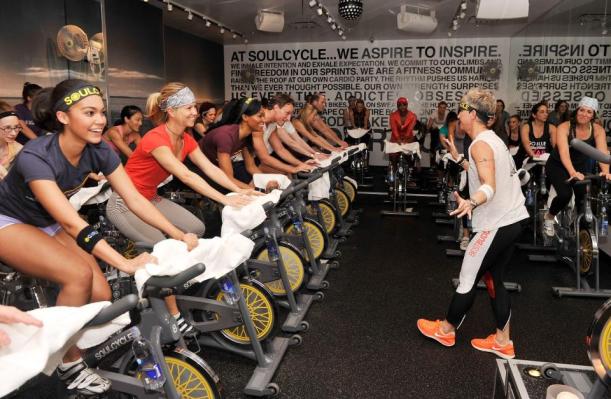
What these brands have done which is so appealing is through their business model, allowing their members to ‘share’ the cost of the instructor by spreading the cost of their membership or class fee.
If an instructor gets paid $50 an hour, you would only need a few people per class to match that with anything else being revenue for the brand. So, the coach gets their fee, the brand makes a profit and the consumer gets instructor-taught classes, with the benefit of working out with others for added support and encouragement. All for a reasonable price. Win win win thanks to the sharing economy at it’s finest!
However, that is only half the story.
Using this ‘sharing economy’ business model, these fitness brands have been able to solidify their value proposition by creating powerful, strong brands that connect emotionally with their consumers, promoting extreme brand loyalty and high levels of word-of-mouth marketing.
One of my Professors at Northwestern, Ariel Goldfarb, taught me that, in general, there are three types of benefit a consumer can derive from a brand, and these new ‘sharing-economy’ fitness brands perfectly epitomize why they are all so important. They are:
- Functional benefits
- Emotional benefits
- Self-expressive benefits
While these new ‘sharing economy’ fitness brands really do offer great functional benefits, it is with their emotional and self-expressive benefits that they really kill it, meaning they form intimate connections with their consumers, creating long-standing abiding relationships.
Let’s take SoulCycle, for example. Spin classes have been around for decades, often offered free with a normal gym membership. Yet somehow women are still flocking to SoulCycle for their spin class and paying $30 a session for the privilege. Why?
Functional benefits – yes, SoulCycle may have better quality and unique spin bikes, but any spin class can at least closely copy this. After all, there are limited functional movements that can be done on a spin bike.
What they can’t copy are the emotional and self-expressive benefits that come with SoulCycles’ brand equities – the unique music, motivational speeches and environment leaving attendees feeling satisfied, confident, empowered and with a sense of prestige.
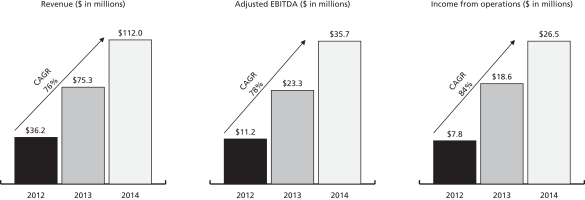
This is similarly the case with CrossFit and the other ‘sharing economy’ fitness brands.
Functionally, I can do any CrossFit movement in the most basic of gyms. What I don’t get are the emotional and self-expressive benefits that come with CrossFit’s brand equities – the environment of togetherness, community, support and a shared sense of beliefs meaning I leave my CrossFit gym with feelings of athleticism and confidence.
That is where these new fitness brands win, and also what the traditional gym brands cannot closely copy.
The famous humorous saying goes:
“How will you know someone does CrossFit? They will tell you themselves!”
While this is clearly a jokey way of saying CrossFitters don’t stop talking about the brand, it epitomizes how strong these ‘sharing economy’ fitness brand’s connections are with their consumers.
Their emotional and self-expressive benefits make consumers such strong brand advocates that they feel the need to tell friends about it, and we know word-of-mouth is the cheapest and most effective form of marketing there is.
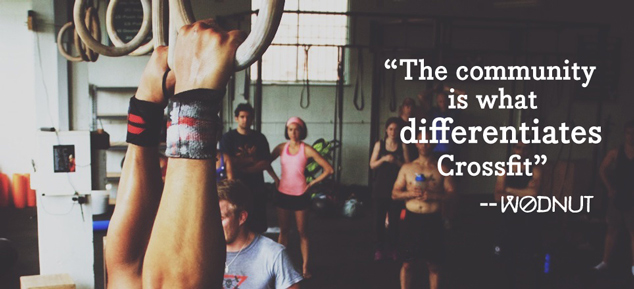
Still not convinced? There are now more CrossFit affiliates than Starbucks locations around the world. In fact, so strong are these new ‘sharing economy’ fitness brands that they have given rise to completely new brands and helped other struggling brands revive.
ClassPass, formed in 2013, has arisen specifically because of the new brands’ success allowing consumers to purchase a pass permitting them to try out many of these new ‘sharing economy’ fitness brands for a discount fee.
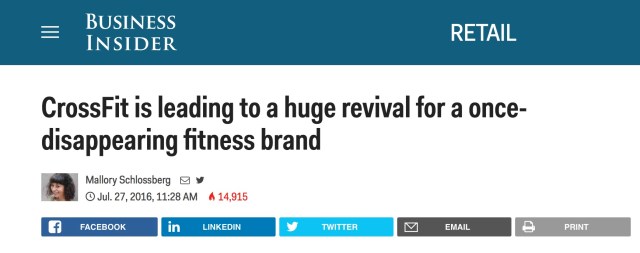
Reebok has made a positive comeback by positioning themselves as the major CrossFit athletic apparel partner and sponsoring the annual CrossFit Games, which Netflix recently released a documentary about, ‘Fittest on Earth’. Every brand loves a bit of earned media!
I could continue to babble on about the benefits of these ‘sharing economy / emotionally powerful’ fitness brands and why they are becoming so successful, as I have seen first hand how easily it is to become a brand advocate. However, I don’t want to bore you to death.
I will finish with this. I would be very very worried if I was the CMO of LA Fitness, Planet Fitness or other traditional gym brands. Yes, they arguably do have a different target audience due to the difference in price, but in an age of consumer-centricity, people are getting fed up of conventional do-it-yourself gyms.
While many do provide some instructor-taught group classes, I can’t see a traditional gym brand being able to successfully copy these new brands’ business model. This is mainly because traditional gym brands generally have larger spacing and amenity requirements such as pools, while these ‘sharing economy’ fitness brands mostly need one small studio / room with various classes throughout the day to operate. It is their small space that contributes to their close-knit communities.
Even if traditional gym brands could copy the business model, I can’t see them being able to offer similar emotional and self-expressive benefits that the likes of CrossFit, SoulCycle and other ‘sharing economy’ fitness brands have built their equities around anytime soon.
I can see gym-goers choosing one of the two. I made my decision 6 months ago after that first CrossFit class. Let’s see what other consumers decide.
 Brand Watch by Alex Keshishian