
Culture fascinates me. I have been exposed to quite a few in my 26 years of life, having been lucky enough to travel substantially, living and studying in four different countries so far.
While it would be wrong to say all culture within the United States is the same (far from it), certain aspects of it can be generalized, and after living here for the last 2 years, it is safe to say, in general, American culture is fascinating and unique.
From the unmatched patriotism on July 4th to the famous American Thanksgiving where, in arguably a relatively divided nation, Americans, regardless of political views, religion, ethnicity or class, connect with their families for one goal – to appreciate and give thanks for what they have, and ultimately for being an American.
However, there has been one aspect of American culture that has surprised me the most, and I needed to be part of it to fully immerse and appreciate it. It is American students’ intimate connections with their universities.
Sounds weird, right? Let me elaborate.
If I were to ask you, out of all the countries in the world, which citizens have the strongest bond with their universities, you would be right to say it is by far the Americans. Most evident and epitomized during an American university’s famous annual homecoming – a coming together of current and past students, friends and families to celebrate the institution.
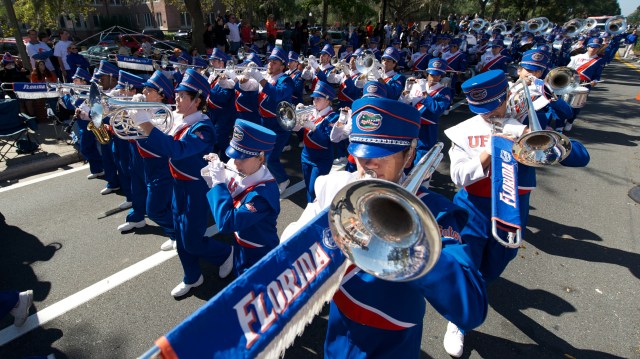
In other countries, university tends to be more of a stopgap, to tick the box of getting a good degree, making some friends, generating fond memories and ultimately getting a job.
Don’t get me wrong, students enjoy and love their universities outside of the US, but once a student graduates and leaves, there really is little reason to ever go back. Homecoming isn’t a university tradition elsewhere. Neither are mascots, songs, parades or marching bands. You will be unlikely to find anyone over the age of 25 wearing a garment featuring a university name outside of the US.
I re-tested this theory when I spoke to a good friend in England the other day, who has been working at a London ad agency for nearly two years. When I asked, he didn’t know where any of his colleagues or bosses had gone to university.
“I have no idea, no one really talks or cares about uni once you’ve entered your professional career,” he claimed.
Compare that to the US where, if you are reading this from your office, you probably wouldn’t have to look further than someone’s desk to find a university badge or sticker indicating the university they attended.
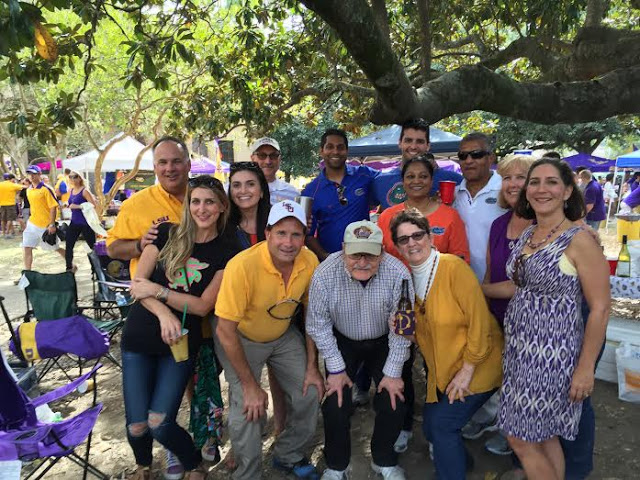
So why is this an American thing? One might argue that college sports have something to do with it.
The United States has by far the highest standard of college sports. It is only in the US that professional athletes are picked from universities. In other words, varsity college sports are effectively academies nurturing future professionals. Over 30 million people, or approximately 10% of the US population viewed the 2015 National Football Championship game between Ohio State and Oregon.
Outside of the US, college sports are nothing more than an extracurricular hobby for students. Huge college stadiums and televised coverage of sporting events are nonexistent. In fact, you’d be lucky to have a crowd of 30 people at a game.
The high standard of college sport in the US make students and alumni the equivalent of supporters and fans of a professional team, in fact, many are more loyal to their university team than their professional team.
Thus, each college game (particularly football and basketball) brings a coming together and celebration of the university to support their college teams, unifying the university community as one.
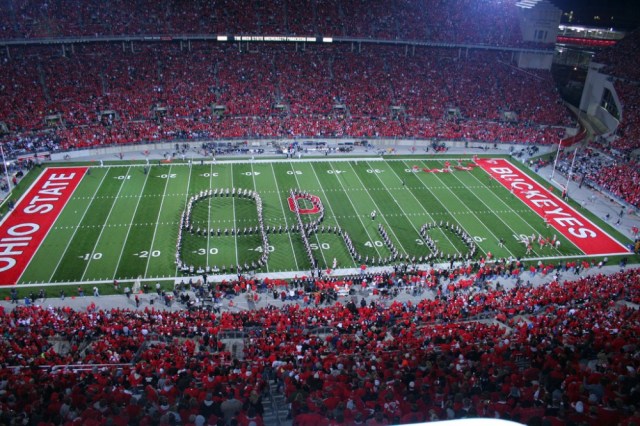
So yes, American university sports are certainly a factor to this insight.
However, I found students who attended smaller American universities, where the standard of sport was lower and where major sports like American football were not played, also shared this connection with their institution.
That is because this intimate connection stems from something deeper than just college sports. And that is identity. In America, and only in America, your university becomes an integral part of your identity.
So this is a marketing blog and how is this random insight related to marketing? You may be wondering.
As a graduate student working towards my Master’s degree at Northwestern University, I undertook a strategic planning project for MillerCoors’ Smith and Forge Hard Cider, which provided me with a deeper insight into this connection.
What I discovered was that in the US, so intimate was the connection between students and their universities, that it becomes salient to their identity. And identifying as a student at a particular university brings along an affiliation with certain brands. For males, this tended to be Miller Lite and Bud Light for alcoholic beverages. Who hasn’t seen a group of young male American university students hauling a twenty-four pack of Bud Lights to their next tailgate? Not that mind-blowing, right?
What I found was intriguing was the process that happens following graduation – the changing of this university–student bond where a loss of identity takes place. Whereas before a student would define themselves as, “Hey I’m John, I am an undergraduate student at Northwestern studying archaeology, and I’m originally from Wisconsin.”
They could not say this anymore, after all, they were no longer a student and who defines themselves as “a recent graduate from Northwestern”? Not many.
Students may have found a job after graduation, or are taking some time to decide what to do. Either way, once graduated, I found that students stepped away from their identity as a college student and sought to express their new identity within a new, professional life stage. This happens in a variety of ways, perhaps when one moves into their own place for the first time, buys clothing from a classier brand, or even purchases furniture from somewhere other than Ikea. (I still love Ikea personally).
So, isn’t this the case everywhere in the world?
Yes and no. In Latin America, Asia, and certain European nations, this process is delayed and minimized since culturally it is custom to live at home and maintain homely ties until marriage.
In other countries such as the United Kingdom, naturally, students’ purchasing habits do change when entering the workforce and earning an income. However, because the university is a much smaller part of one’s identity, there are fewer brands and customs associated with being a student. Thus, there is less emphasis on trying to express a change in identity and the entering of the new professional life stage upon graduating.
For example, in the UK there is no such thing as a ‘college beer’. 5 years on, my friends and I are still loyal to the same beverage brands we favored while pursuing our undergraduate degrees in England. There has been no need to change beverage brand affiliations because in the UK there is no beverage brand that is heavily associated with being a student.
However, in my research on male US college-educated millennials (this was Smith and Forge’s target audience), in alcoholic beverages I found these recent graduates distancing themselves from college beers such as Miller Lite / Bud Light. Instead, there was a growing affiliation and experimentation with mixed spirits, cocktails, and upmarket beer brands.
I used this insight as a driving force behind our shopper marketing campaign for Smith and Forge Hard Cider called #ExpandYourHorizons, which aimed to entice male millennials into trying Smith and Forge hard cider and quite literally expand their horizons since cider is generally seen as a female beverage, but Smith and Forge Hard Cider is positioned and targeted as a masculine drink.

The objective of the strategy was to for these college educated male millennials to develop a brand relationship with Smith and Forge Hard Cider and use their new affiliation with the brand to express their uniqueness and new professional life stage.
To conclude and summarize. In the US, students form unique bonds with their universities that become integral to their identities. This is unparalleled anywhere else in the world. With this identity comes affiliations with certain brands and customs.
Upon graduation, this bond is broken, and these graduates, while maintaining a close affiliation and relationship as alumni, distance themselves from their former identities as college students and seek to express the fact that they have entered a new professional life stage and thus, have a new professional identity. These alumni experiment, change purchasing habits and ultimately form new brand relationships in order to express this new professional identity and life stage.
From a marketing perspective, brands targeting this demographic should use this insight and entice the target market to affiliate themselves with their brand as a way of expressing their new professional identity. This could be an effective strategy to acquire new customers and generate long-running brand loyalty as these graduates use their relationships with new brands to express their professionalism and distance themselves from the college student stigma.
Thank you for reading! As always please feel free to agree, disagree, comment or send me feedback. If you are interested in learning more about the Smith and Forge Hard Cider shopper marketing project, please find the presentation deck on my Linkedin page.
 Brand Watch by Alex Keshishian
Interesting perspective–one that has a much better chance of appearing to someone who hasn’t grown up in a U.S. context! The idea that the college brand is an identity attribute that needs some distancing at the change of this life stage is compelling. But it’s also interesting, as you point out, how after a certain amount of time the college brand is reintegrated into one’s identity (deskware, hoodies, license plate frames and the like). Makes me wonder why some reintegrate mightily, while others not so much (and if that correlates with their own assessment of their current life stage…)
LikeLike